Death-worlds and Afterlives: Thinking with Death and the (Living) Dead was a 3-day workshop that brought together a group of participants whose multi-/trans-/anti-disciplinary praxes address and activate theorisations and research of death-in-life through their respective practices and subjectivities. The workshop tackled necroviolence, the necropolitical, and the necrographic, and engaged the structures that dictate how some people may live and how others ought to die. Death-worlds and Afterlives proposed urgent questions around sovereignty and death-worlds, and offers articulations of what it means to be human (outside of the hierarchical symbolic order) through varied perspectives of the Black radical tradition as situated on and oriented toward the African continent.
Conceptualised by artist- researcher Zara Julius, and hosted in collaboration with the Johannesburg Institute for Advanced Study as part of their Global Blackness project at the University of Johannesburg in April 2025, the workshop extended Zara’s prevailing interest in the death-life nexus, and provided a generative vehicle through which we might engage some of the most pressing questions that face contemporary public culture in the majority world: carceral systems, forced migration, land dispossession, ancestralisation, ecological exploitation, land and labour, genocide, public archives, and the restitution and repatriation of looted cultural “objects” and human/ ancestral remains.
DEATH-WORLDS & AFTERLIVES:
THINKING WITH DEATH & THE (LIVING) DEAD
3 day workshop (2025)
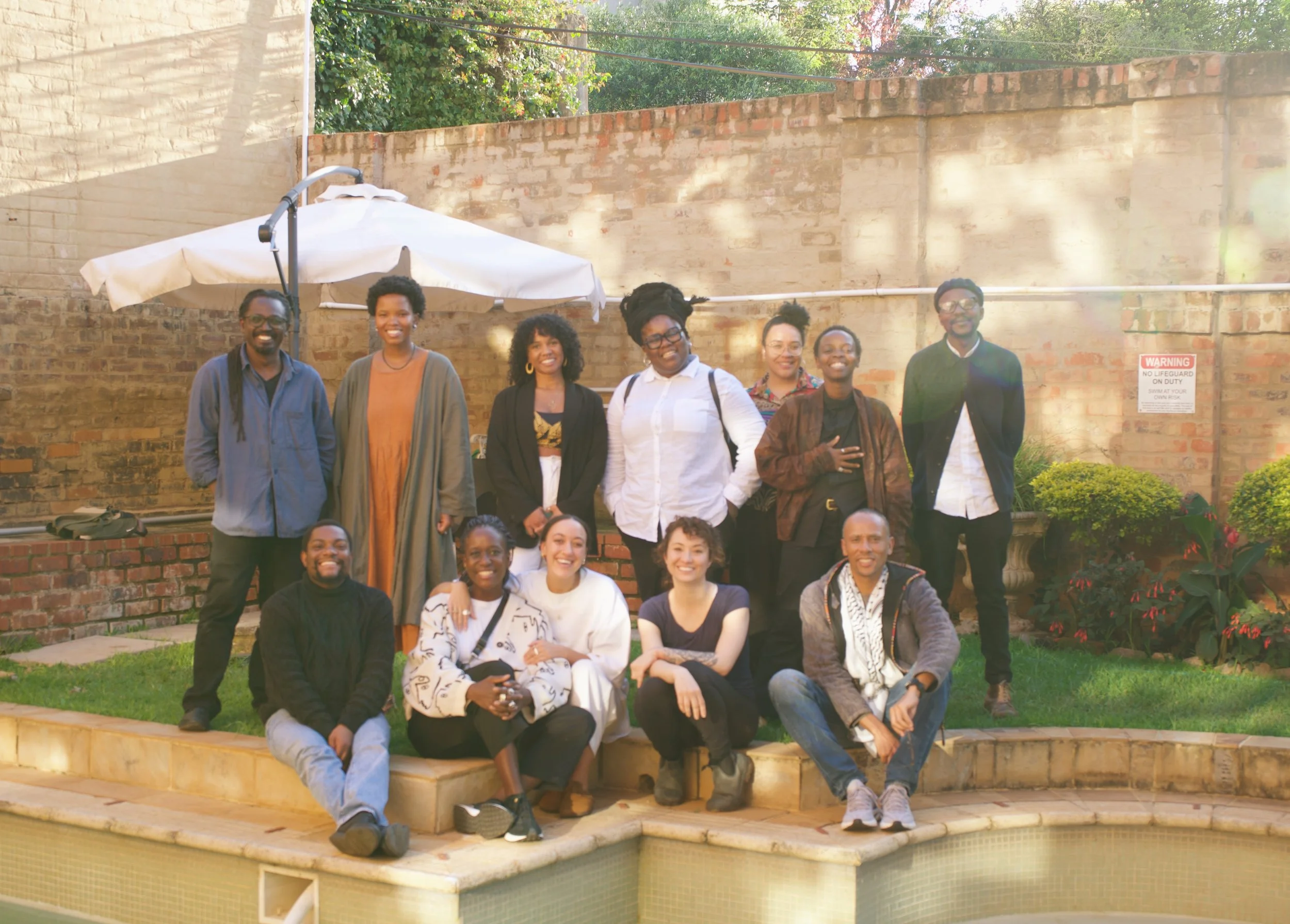
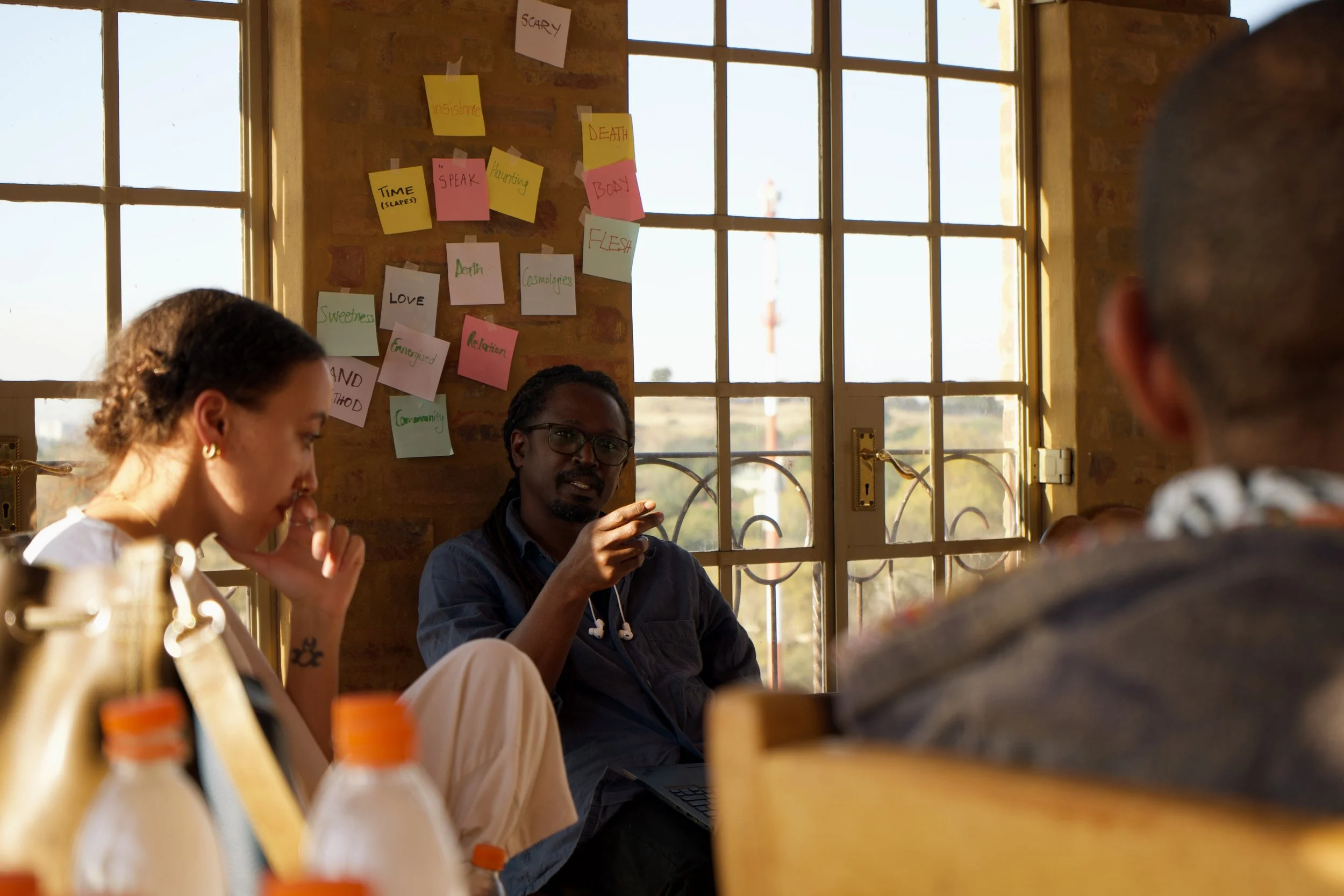
The workshop invited scholars and cultural practitioners from varied disciplines to not only share their respective works that engage questions of death, dying and the African body (and by extension, land), but also to collectively imagine what might come after and outside of death and death-worlds. Practically, the workshop was an opportunity to share aspects of research that are maybe informed by theory, but also privilege an understanding that time-based media and embodied knowledges are laden with theory too, and thus inform practice and scholarship.
This convening was an exercise in Black Study in all its forms: communal study that is at once an intellectual, social and aesthetic practice. Each day was orientated around a cluster of sharing and resultant plenary discussions and prompts. There was no definitive destination for these plenary discussions. Instead, they were flexible in format, and privileged a collective associative journeying through discussion, song, poetry, film clips and the like.
The 3-day convening was punctuated by one public moment, where invited members of the broader Johannesburg cultural community could engage in a selection of fragments or prompts that emerged from the daytime plenaries.
Invited participants:
Zara Julius (artist, RSA)
Uhuru Phalafala (writer, RSA)
uMbuso weNkosi (lecturer & writer, RSA)
Pertunia Msani (performer, RSA)
Pansee Atta (artist & researcher, Egypt/ Canada)
Ola Hassanain (artist, Sudan/ Netherlands)
Hugo ka Canham (writer, RSA)
Gregory Maxaluane (lecturer & writer, RSA)
Motsane Seabela (museologist & curator, RSA)
Wayne Modest (curator, Jamaica/ Netherlands)
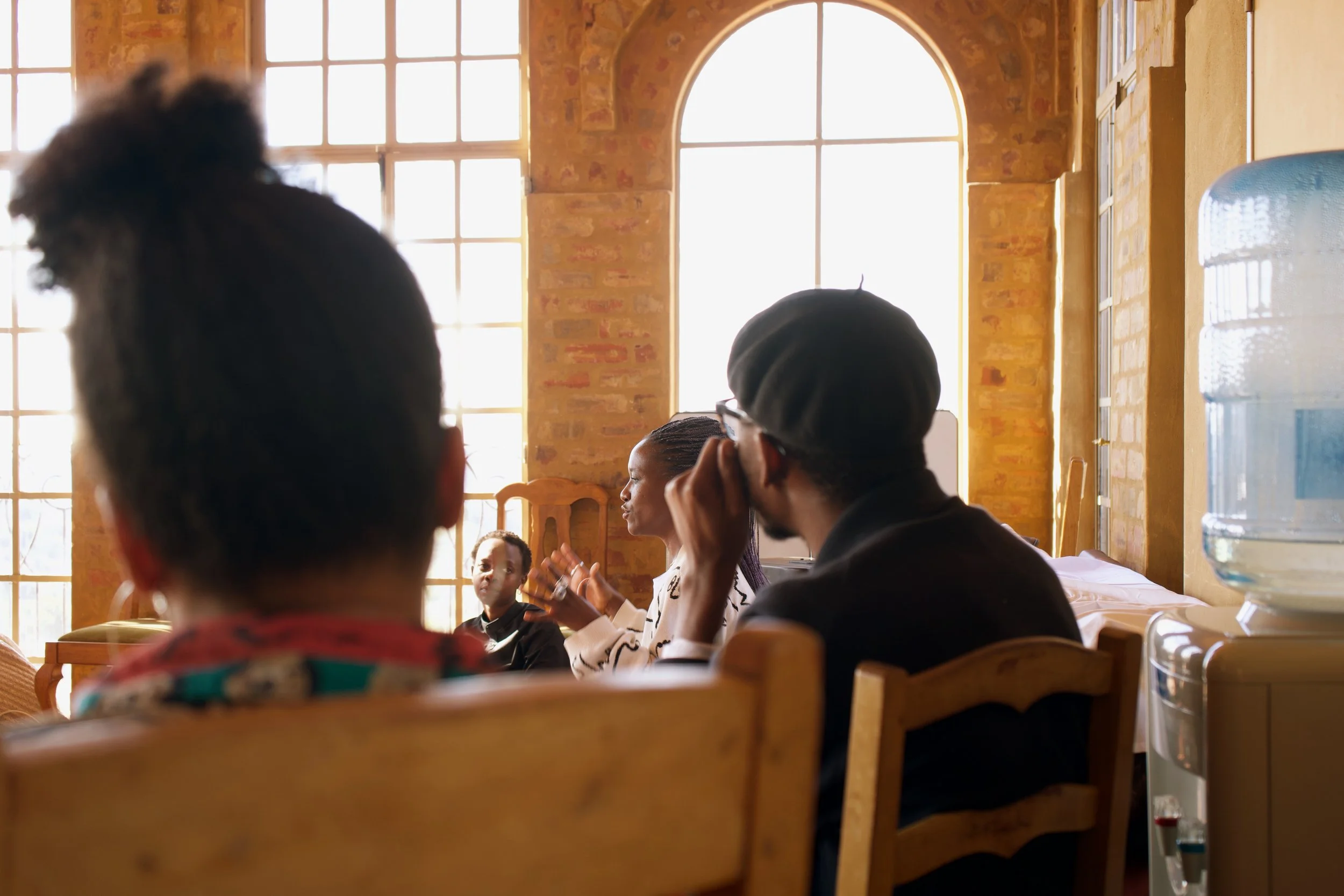
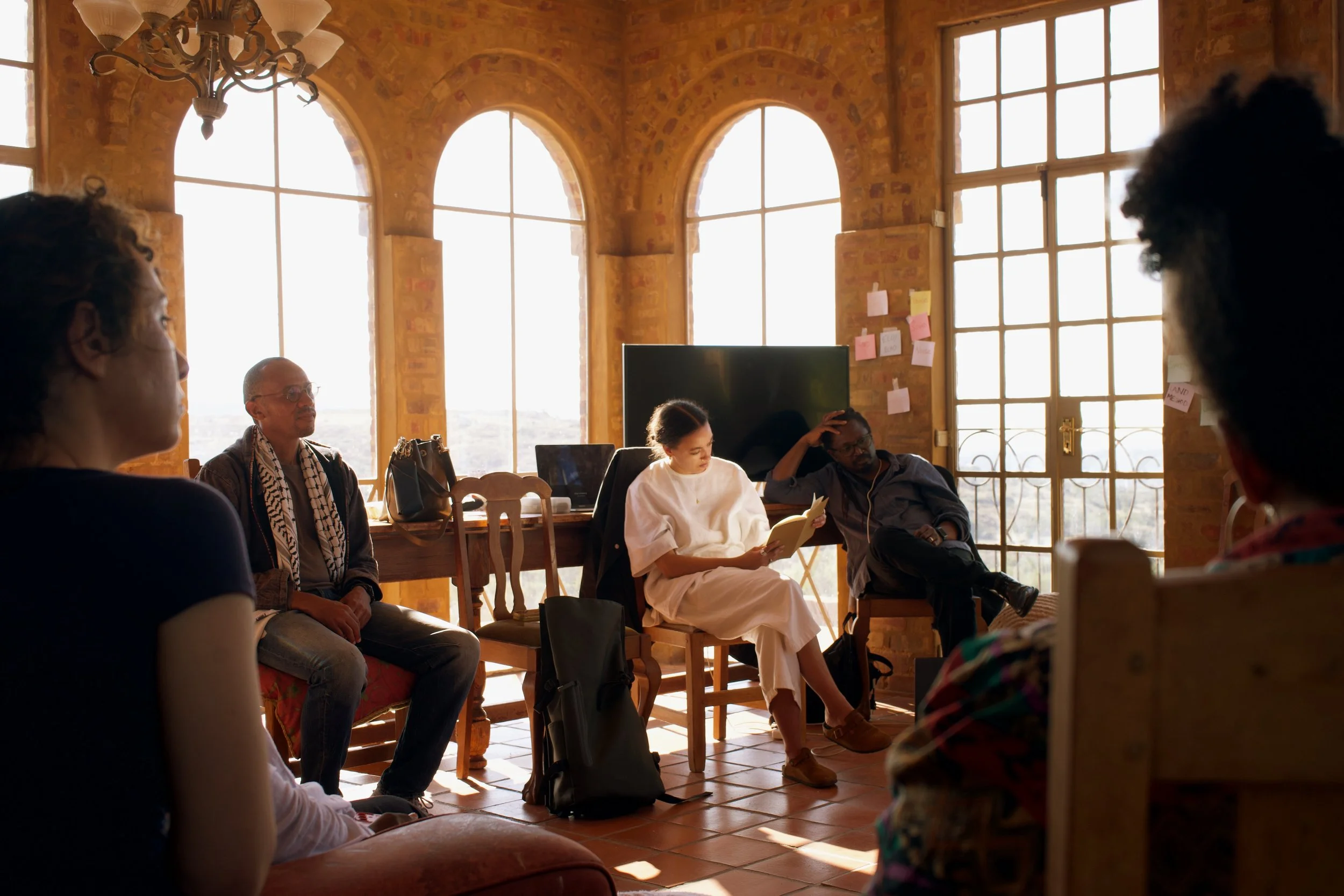
This workshop was funded in part by the Pressing Matter Repair Lab project